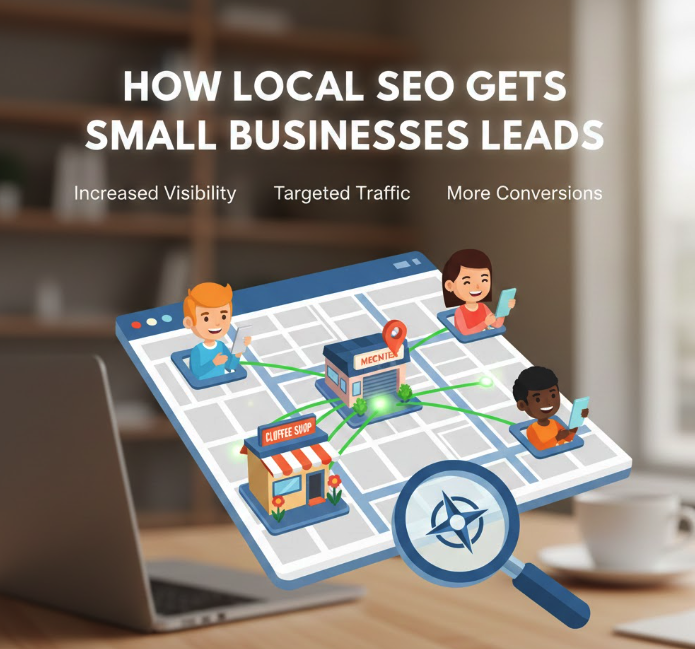
Running a small business means every dollar counts. While paid advertising can deliver quick results, the costs add up fast—and the moment you stop paying, the leads stop coming. That’s why smart business owners are turning to local SEO: a sustainable strategy that brings in qualified customers without ongoing ad spend.
Local SEO helps businesses appear in location-based searches when potential customers are actively looking for services nearby. Instead of paying for clicks, you earn visibility through strategic optimization. The result? More foot traffic, phone calls, and sales—all without the monthly advertising bills.
In this comprehensive guide, we’ll show you exactly how local SEO drives leads for small businesses, the strategies that work best, and actionable steps you can implement today to start attracting more customers in your area.
What Is Local SEO and Why It Matters
Local SEO focuses on optimizing your online presence to attract customers from specific geographic areas. When someone searches for “plumber near me” or “best Italian restaurant in Brooklyn,” local SEO determines which businesses appear at the top of the results.
The impact is significant. Research shows that 46% of all Google searches have local intent, and 76% of people who search for something nearby visit a business within a day. For small businesses serving local markets, this represents an enormous opportunity to capture high-intent customers at the exact moment they’re ready to buy.
Unlike traditional SEO that targets broad keywords nationally, local SEO zeroes in on your community. You’re not competing with every business in your industry worldwide—you’re competing within your city or neighborhood, where you can establish genuine authority and relationships.
Why Local SEO Beats Paid Advertising for Small Businesses
While Google Ads and Facebook advertising have their place, local SEO offers distinct advantages for small businesses with limited budgets.
Sustainable Long-Term Results: Once you rank well in local search, those results persist. You don’t need to keep paying to maintain visibility. A well-optimized Google Business Profile and website continue working for you 24/7 without ongoing costs.
Higher Trust and Credibility: Organic search results carry more weight with consumers than paid ads. Studies show that 70% of users ignore paid ads and click on organic results instead. When your business appears naturally in local searches, customers perceive you as more established and trustworthy.
Better Targeting: Local SEO connects you with people actively searching for your specific services in your specific area. These are warm leads with high purchase intent, not random impressions to broad audiences who may not be interested.
Cost Efficiency: The average small business spends between $1,000 and $10,000 monthly on paid ads. Local SEO requires an upfront investment in optimization but delivers compounding returns over time without recurring ad costs.
Protection from Algorithm Changes: When you rely solely on paid ads, platform changes can devastate your lead flow overnight. Local SEO diversifies your lead generation across multiple channels—Google Maps, organic search, directories, and review platforms.
Effective local SEO combines multiple elements working together to boost your visibility and attract customers.
Google Business Profile Optimization
Your Google Business Profile (formerly Google My Business) is the foundation of local SEO. This free listing appears in Google Maps and local search results, often before organic website listings.
A complete profile includes accurate business information with your name, address, phone number, website, hours of operation, and business category. High-quality photos showing your storefront, products, team, and work build trust and increase engagement. Regular posts about updates, offers, and events keep your profile active and relevant.
The business description should clearly explain what you do, who you serve, and what makes you unique—incorporating relevant local keywords naturally. Attributes and amenities help customers filter results to find exactly what they need.
Consistent updates signal to Google that your business is active and legitimate. Businesses with complete profiles receive 7 times more clicks than those with incomplete information.
Local Keyword Research and Implementation
Understanding what your customers search for locally is critical. Local keywords typically include geographic modifiers like city names, neighborhoods, or “near me” phrases.
Start by brainstorming your services combined with location terms. Examples include “emergency electrician in Austin,” “family dentist downtown Seattle,” or “organic grocery delivery Portland.” Use tools like Google’s autocomplete suggestions to discover what people actually type when searching for businesses like yours.
Implement these keywords strategically throughout your website—in page titles, headings, meta descriptions, and naturally within content. Create location-specific service pages if you serve multiple areas, with unique content for each location rather than duplicate pages.
Don’t keyword stuff. Write naturally for humans first, incorporating location terms where they make sense contextually. Google’s algorithm is sophisticated enough to understand relevant content without requiring awkward repetition.
Building Local Citations and NAP Consistency
Citations are mentions of your business name, address, and phone number (NAP) across the web. Google uses these references to verify your business legitimacy and location.
Inconsistent information confuses search engines and hurts your rankings. If your address is “123 Main Street” on your website but “123 Main St.” on directories, Google may treat these as separate businesses.
Create citations on major platforms like Yelp, Yellow Pages, Facebook, Bing Places, Apple Maps, and industry-specific directories relevant to your business. Ensure your NAP information matches exactly across every listing.
Quality matters more than quantity. Focus on authoritative directories and local business associations rather than spammy submission sites. Each citation acts as a trust signal reinforcing your local presence.
Review Generation and Management
Online reviews significantly impact both search rankings and customer decisions. Google considers review quantity, quality, and frequency when determining local rankings.
Develop a systematic approach to requesting reviews from satisfied customers. The best time to ask is immediately after delivering excellent service when satisfaction is highest. Make it easy by sending direct links to your Google Business Profile or other review platforms.
Respond to all reviews—positive and negative. Thank customers for positive feedback and address concerns professionally in negative reviews. This demonstrates that you value customer input and are committed to improvement.
Never buy fake reviews or incentivize reviews in ways that violate platform guidelines. Authentic reviews from real customers carry more weight and build genuine trust with prospects.
Location-Specific Content Creation
Creating content relevant to your local community establishes you as a neighborhood authority and attracts local search traffic.
Write blog posts about local events, community involvement, or location-specific tips related to your industry. For example, a landscaping company might write about “Best Native Plants for Phoenix Gardens” or “Preparing Your Denver Lawn for Winter.”
Create neighborhood guides, local resource lists, or case studies featuring local clients (with permission). This content naturally incorporates local keywords while providing genuine value to your community.
Community-focused content earns local backlinks when other organizations, local news sites, or community blogs reference your helpful resources. These local backlinks significantly boost your local SEO authority.
Technical SEO for Local Businesses
Technical optimization ensures search engines can properly crawl, understand, and rank your website.
Implement structured data markup (schema) to help Google understand key information about your business, including your address, phone number, hours, and services. Local business schema appears in many local search features.
Ensure your website loads quickly, especially on mobile devices where most local searches occur. Compress images, minimize code, and use fast hosting. Page speed directly impacts both rankings and user experience.
Mobile optimization is non-negotiable. Your website must function flawlessly on smartphones with easy-to-tap buttons, readable text without zooming, and streamlined navigation. Over 60% of local searches happen on mobile devices.
Create an XML sitemap and submit it to Google Search Console to help search engines discover and index all your pages efficiently.
Advanced Local SEO Strategies That Drive Results
Beyond the basics, several advanced tactics can accelerate your local SEO success.
Voice Search Optimization
Voice search is growing rapidly, with different query patterns than typed searches. People speak more conversationally, using longer phrases and questions.
Optimize for conversational keywords and question-based queries. Create FAQ pages answering common questions customers ask about your services. This content naturally aligns with how people use voice assistants.
Featured snippets often provide voice search answers. Structure content with clear, concise answers to questions, using headings that match common queries.
Video Content for Local Engagement
Video content keeps visitors engaged and can rank in both regular search and Google’s video results. Create videos showcasing your business, explaining your services, sharing customer testimonials, or offering local tips.
Optimize video titles, descriptions, and tags with local keywords. Upload to YouTube and embed on your website to maximize visibility across platforms.
Videos humanize your business and build stronger connections with potential customers than text alone.
Local Link Building
Backlinks from other local websites signal relevance and authority to search engines. Focus on earning links from local organizations, business associations, chambers of commerce, and complementary businesses.
Sponsor local events, participate in community activities, or offer expert commentary to local news outlets. These activities build relationships and often result in valuable local backlinks.
Partner with related businesses for co-marketing opportunities. A wedding photographer might partner with florists, venues, and caterers, with all businesses linking to each other’s websites.
Leveraging Social Media for Local Visibility
While social signals don’t directly impact rankings, social media amplifies your local presence and drives traffic to your website.
Geo-tag posts with your business location. Join local Facebook groups and participate helpfully without being overly promotional. Share content relevant to your community, not just promotional material.
Encourage customers to tag your business in their posts and stories. User-generated content builds social proof and expands your reach within your local area.
Measuring Local SEO Success
Tracking the right metrics helps you understand what’s working and where to focus improvement efforts.
Monitor Google Business Profile insights including how customers find your listing (search vs. maps), what actions they take (calls, direction requests, website clicks), and which photos get the most views.
Track keyword rankings for your target local search terms using tools like Google Search Console, which shows which queries drive traffic to your site and your average position.
Set up conversion tracking to measure how many leads and sales come from organic local search. This might include phone call tracking, contact form submissions, or online purchases.
Measure local pack rankings—your position in the three businesses displayed prominently in local search results. Tools like BrightLocal or Whitespark help track your local pack visibility.
Compare metrics month-over-month to identify trends. Local SEO takes time, but consistent effort produces measurable improvements in visibility and leads.
Common Local SEO Mistakes to Avoid
Many small businesses undermine their local SEO efforts through common errors.
Inconsistent Business Information: Different addresses, phone numbers, or business names across listings confuse search engines and customers. Audit all your online listings and correct any inconsistencies.
Ignoring Negative Reviews: Leaving negative reviews unanswered signals that you don’t care about customer satisfaction. Always respond professionally and constructively to criticism.
Neglecting Google Business Profile Updates: An outdated profile with old photos, incorrect hours, or no recent posts appears abandoned. Keep your profile fresh and current.
Creating Duplicate Listings: Multiple Google Business Profiles for the same location violates guidelines and dilutes your visibility. Merge duplicates immediately.
Keyword Stuffing: Cramming keywords unnaturally into content looks spammy to both users and search engines. Write naturally and focus on providing value.
Buying Reviews or Citations: Fake reviews and low-quality citation services can result in penalties that harm your visibility for years. Build your presence authentically.
Getting Started with Local SEO Today
Local SEO isn’t complicated, but it does require consistent effort. Here’s how to start generating leads without ads.
Begin by claiming and fully optimizing your Google Business Profile. This free tool delivers the fastest results and should be your first priority.
Audit your website for local keywords and optimization opportunities. Add location-specific content to key pages and create dedicated location pages if needed.
Build citations on the most important directories—start with the top 20 platforms relevant to your industry and location.
Implement a review generation system. Train your team to ask for reviews and create simple processes making it easy for customers to leave feedback.
Create a content calendar for publishing local blog posts regularly. Even one quality local post monthly builds authority over time.
Most importantly, commit to consistency. Local SEO compounds over time. Businesses that stick with it for 6-12 months see dramatic improvements in visibility and leads.
Frequently Asked Questions
How long does it take to see results from local SEO?
Most businesses notice initial improvements within 3-6 months, with significant results appearing after 6-12 months of consistent effort. Local SEO is a long-term strategy that builds momentum over time. Quick wins often include increased visibility in Google Maps and more profile views, while top rankings for competitive keywords typically require more sustained effort.
Can I do local SEO myself or should I hire an expert?
Basic local SEO is absolutely manageable for small business owners willing to learn and invest time. Claiming your Google Business Profile, building citations, and requesting reviews are straightforward tasks. However, technical SEO, comprehensive local strategies, and competing in highly competitive markets often benefit from professional expertise. Many businesses start with DIY efforts and hire help as they grow.
How much does local SEO cost compared to paid advertising?
Initial local SEO investment typically ranges from $500-$3,000 for small businesses handling basics themselves or hiring help for setup. Ongoing maintenance might cost $300-$1,000 monthly if outsourced. Compare this to paid ads costing $1,000-$10,000+ monthly with results disappearing when you stop paying. Local SEO delivers better long-term ROI despite requiring patience for results.
What’s the difference between local SEO and regular SEO?
Regular SEO targets broad audiences nationally or globally, while local SEO focuses specifically on attracting customers in defined geographic areas. Local SEO emphasizes location-based signals including Google Business Profile, local citations, local keywords, and proximity to searchers. Regular SEO prioritizes factors like domain authority and general content quality without geographic emphasis.
Do I need a website for local SEO?
While you can achieve some visibility through Google Business Profile alone, a website significantly enhances local SEO effectiveness. Websites provide opportunities for detailed service information, blog content, customer testimonials, and conversion optimization that profiles cannot match. Even a simple 5-page website dramatically improves your ability to compete in local search.
How important are online reviews for local SEO?
Reviews are critically important, serving as both a ranking factor and a decision-making tool for customers. Google considers review quantity, quality, recency, and diversity when determining local rankings. Additionally, 93% of consumers say reviews influence their purchase decisions. A systematic approach to generating and managing reviews should be a top priority.
Should I optimize for “near me” searches?
You don’t need to literally include “near me” in your content because Google understands search intent and user location. Instead, focus on location-specific keywords and ensuring your Google Business Profile is properly set up. When people search “plumber near me,” Google shows results based on the searcher’s location, your business location, and relevance—not whether you used “near me” in your content.
What if my business serves multiple locations?
Create separate location pages on your website for each area you serve, with unique content for each page rather than duplicating content. If you have physical locations, create separate Google Business Profiles for each address. If you’re service-based without physical locations, list your primary address and specify your service areas in your profile.
How do I compete with bigger companies in local search?
Small businesses actually have advantages in local SEO. Focus on hyperlocal content, community involvement, personalized customer service reflected in reviews, and neighborhood-specific expertise. Large companies struggle to match the local authenticity and community connections smaller businesses naturally possess. Double down on what makes you genuinely local.
Can local SEO help businesses without physical storefronts?
Absolutely. Service-area businesses like plumbers, electricians, consultants, and contractors benefit tremendously from local SEO. You can use your home address or a virtual office as your business address while specifying service areas in your Google Business Profile. Focus on location-specific content and targeting customers in the areas you serve.
Conclusion: Building Sustainable Growth Through Local SEO
Local SEO represents one of the smartest investments small businesses can make. Unlike paid advertising that stops working the moment you stop paying, local SEO builds long-term visibility that compounds over time.
The businesses winning in local search aren’t necessarily the largest or most established—they’re the ones consistently optimizing their online presence, engaging with customers, and demonstrating local expertise. With the strategies outlined in this guide, any small business can compete effectively in their local market.
Start with the fundamentals: optimize your Google Business Profile, build consistent citations, generate reviews, and create valuable local content. Maintain consistency, measure your progress, and adjust your approach based on results.
The leads you generate through local SEO cost less, convert better, and build sustainable growth for your business. While competitors burn through advertising budgets, you’ll be building an asset that drives leads for years to come—without writing another check for ads.
