

Ever wondered why certain websites consistently rank at the top of search results for their industry topics, while others with similar content struggle to get noticed? The answer often comes down to one critical factor: topical authority.
In today’s SEO landscape, having a few well-optimized pages isn’t enough anymore. Google’s algorithms have evolved far beyond simple keyword matching. They now reward websites that demonstrate genuine expertise and comprehensive coverage of specific topics. If you want to dominate your niche in search results, building topical authority isn’t optional—it’s essential.
This comprehensive guide will show you exactly what topical authority means, why it’s become the cornerstone of modern SEO success, and most importantly, how to build it systematically to outrank your competitors and establish your website as the go-to resource in your field.
What Is Topical Authority in SEO?
Topical authority refers to your website’s perceived expertise, credibility, and trustworthiness on a specific subject in the eyes of search engines—particularly Google. When your site has strong topical authority, Google recognizes you as a reliable source of information on that topic and rewards you with higher rankings across related search queries.
Think of topical authority like being known as the neighborhood expert. If you’re the person everyone asks about gardening because you’ve consistently demonstrated deep knowledge, experience, and helpful advice, you’ve established authority. The same principle applies to websites. When you comprehensively cover a subject from multiple angles with high-quality content, search engines view your site as the definitive resource worth promoting.
This differs significantly from the old approach of targeting individual keywords in isolation. Topical authority requires covering an entire subject ecosystem—the main topic, related subtopics, common questions, different perspectives, and the connections between these elements. It’s about depth and breadth combined.
For example, a website with topical authority on email marketing wouldn’t just have one article about “email marketing tips.” They’d have comprehensive content covering list building strategies, segmentation techniques, automation workflows, deliverability best practices, copywriting for emails, analytics and testing, compliance issues, and industry-specific approaches. Every piece connects to create a complete knowledge hub.
Why Topical Authority Matters More Than Ever
The SEO world has changed dramatically over the past decade, and topical authority sits at the center of these changes.
Google’s Algorithm Evolution: Search engines used to rely heavily on keyword density and backlink quantity. The 2013 Hummingbird update changed everything by introducing semantic search, which focuses on understanding meaning and intent rather than just matching keywords. Subsequent updates including RankBrain, BERT, and the Helpful Content System have continued emphasizing context, user intent, and comprehensive content quality.
The E-E-A-T Framework: Google’s Quality Rater Guidelines explicitly emphasize Experience, Expertise, Authoritativeness, and Trustworthiness. Topical authority directly addresses these criteria. When you consistently publish expert-level content on a subject, you demonstrate all four elements simultaneously.
AI and Featured Results: With the rise of AI Overviews, ChatGPT, and other AI tools that cite sources, topical authority determines which sites get referenced. These systems pull information from sources they deem most authoritative and comprehensive. Building topical authority increases your chances of being cited in AI-generated responses, creating a new visibility channel beyond traditional search results.
Competitive Advantage for Niche Sites: Previously, high domain authority websites dominated rankings regardless of content depth. Now, specialized sites with strong topical authority can outrank industry giants by demonstrating superior expertise in specific niches. This levels the playing field for smaller businesses and content creators.
Long-Term Ranking Stability: Sites with topical authority experience less ranking volatility during algorithm updates. When Google trusts your expertise on a subject, individual content pieces benefit from that overall trust, leading to more stable rankings and faster indexing of new content.
The Difference Between Topical Authority and Domain Authority
While related, these are distinct concepts that serve different purposes in SEO.
Domain authority measures your website’s overall strength and trustworthiness across all subjects you cover. It’s influenced by factors like age, backlink profile quality, technical SEO health, and overall content quality. Domain authority is holistic—it assesses your entire site’s reputation.
Topical authority is specific and focused. It measures your expertise on particular subjects rather than your general reputation. A brand new website can have low domain authority but high topical authority if they comprehensively cover a specific niche with expert content.
Both matter, but in different ways. Domain authority provides the foundation that helps your content get discovered and trusted initially. Topical authority determines which specific queries and topics you’ll rank well for. The most successful SEO strategies combine both—building domain authority while simultaneously deepening topical authority in core subject areas.
Think of domain authority as your reputation in the business community overall, while topical authority is your recognized expertise in your specific profession. You can be generally trusted while being specifically known as the expert in software development, digital marketing, or whatever your focus area is.
How Topical Authority Impacts Your SEO Performance
Building topical authority creates measurable improvements across multiple SEO metrics and business outcomes.
Higher Search Rankings: This is the most obvious benefit. When Google recognizes your topical authority, you rank higher not just for your target keywords but for numerous related queries you didn’t even optimize for. Your authority transfers across the topic ecosystem.
Increased Organic Traffic: Higher rankings naturally drive more clicks. Research consistently shows that 46% of all Google searches have local intent, and websites appearing in top positions capture the majority of organic traffic. Strong topical authority puts you in these valuable positions repeatedly.
More Long-Tail Keyword Rankings: Comprehensive topic coverage means you’ll naturally rank for hundreds or thousands of long-tail variations. These specific, lower-competition queries often convert better because they match precise user intent. One pillar page can rank for dozens of related terms.
Better Click-Through Rates: Users are more likely to click on results from recognized authorities. When they repeatedly see your brand appearing for topic-related searches, familiarity breeds trust. This recognition factor improves CTR even when you’re not in the number one position.
Natural Link Acquisition: Other websites are more likely to link to comprehensive, authoritative resources. As your topical authority grows, you’ll earn backlinks organically from people citing your expertise, sharing your content, and referencing your insights. These natural links further strengthen both topical and domain authority.
Faster Indexing and Ranking: Once you’ve established topical authority, new content on related subjects tends to get indexed faster and rank more quickly. Google trusts that content from recognized authorities is valuable, giving it preferential treatment.
Enhanced Brand Visibility: Appearing consistently across topic-related searches builds brand awareness and positions you as the industry leader. This visibility extends beyond SEO, influencing brand searches, direct traffic, and customer perception.
Building Topical Authority: The Complete Strategy
Creating genuine topical authority requires a systematic approach combining strategic planning, comprehensive content creation, and ongoing optimization.
Step 1: Choose Your Core Topics Strategically
Don’t try to be everything to everyone. Select specific topics where you can realistically become the leading resource.
Consider your business expertise and experience. What subjects do you genuinely understand deeply? Authentic expertise shows in content quality and is essential for building real authority. Choose topics aligned with your actual knowledge base.
Evaluate market opportunity by assessing competition and demand. Use tools like Ahrefs or SEMrush to analyze search volume, competition levels, and existing content quality. Look for topics where you can add unique value rather than just duplicating what already exists.
Start narrow and expand. It’s better to dominate one specific topic completely than to spread yourself thin across many. Once you’ve established authority in your initial topic, you can branch into related areas. For example, start with “content marketing for SaaS companies” before expanding to broader “digital marketing” topics.
Ensure business alignment. Your chosen topics should connect to your products, services, or business goals. Building authority in irrelevant areas wastes resources without driving business outcomes.
Step 2: Conduct Comprehensive Topic Research
Understanding your topic ecosystem is crucial before creating content.
Map the topic landscape by identifying your main topic and all related subtopics, questions, and concepts. Create a visual topic map showing relationships between different subject areas. This becomes your content roadmap.
Use keyword research tools strategically. Rather than just finding high-volume keywords, focus on identifying semantic relationships and topic clusters. Tools like Semrush’s Topic Research, Ahrefs’ Keywords Explorer, and AnswerThePublic reveal how users think about your topic and what information they seek.
Analyze top-performing content in your space. What topics do leading competitors cover? What’s missing from their coverage? What questions remain unanswered? Look for content gaps where you can provide superior value.
Study user intent behind searches. Group keywords by intent—informational, commercial, transactional, and navigational. Understanding intent ensures your content matches what users actually need at different stages of their journey.
Identify related entities and concepts. Google’s Knowledge Graph connects related topics, people, brands, and concepts. Understanding these semantic connections helps you create content that aligns with how search engines understand your topic.
Step 3: Create a Content Hub Architecture
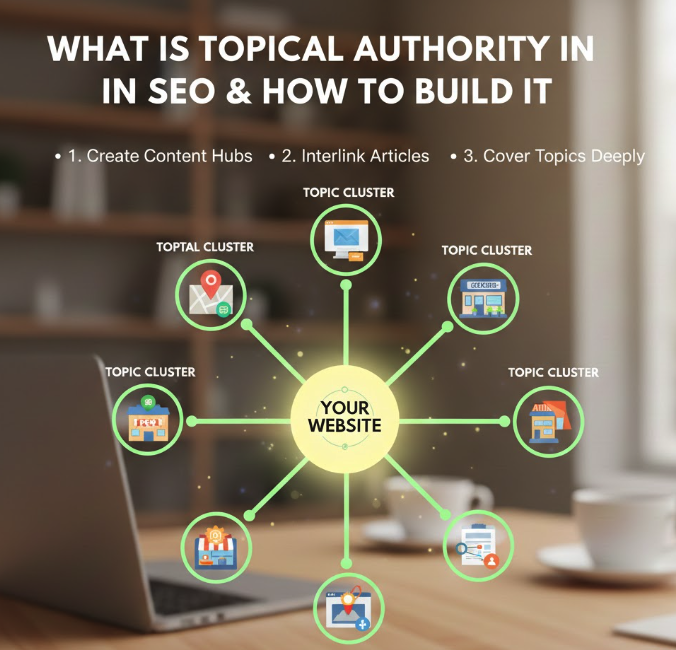
Organize your content using a hub-and-spoke model with pillar pages and cluster content.
Build Comprehensive Pillar Pages: Create authoritative, in-depth guides covering your main topics broadly. These pillar pages should be 3,000-5,000+ words, thoroughly addressing the core subject with clear structure and expert insights. Each pillar becomes the central hub for related content.
Develop Cluster Content: Create supporting articles that explore specific subtopics in detail. Each cluster piece links back to the relevant pillar page and connects to related cluster content. This internal linking structure signals topical relationships to search engines.
Establish Clear Information Hierarchy: Your pillar page sits at the top level, cluster content supports it at the second level, and you might have even more specific content at a third level. This pyramid structure demonstrates comprehensive coverage while keeping information organized.
Maintain Topic Relevance: Every piece of content within a hub should clearly relate to the main topic. Avoid tangential content that dilutes your topical focus. Stay disciplined about what belongs in each content cluster.
Use Strategic Internal Linking: Link cluster content to pillars using descriptive anchor text. Link related cluster pieces to each other. This linking pattern helps search engines understand your content relationships and distributes authority throughout the hub.
Step 4: Create High-Quality, Comprehensive Content
Quality trumps quantity every time when building topical authority.
Demonstrate Real Expertise: Write from experience and include insights only an expert would know. Share original research, case studies, unique perspectives, and lessons learned. Generic, surface-level content won’t establish authority.
Cover Topics Comprehensively: Address subjects thoroughly from multiple angles. Answer obvious questions and anticipate deeper ones users might have. Include different perspectives, various use cases, and practical applications.
Prioritize User Value Over Keywords: While optimization matters, focus first on being genuinely helpful. Answer questions completely, solve problems effectively, and provide actionable advice. Satisfied users signal quality to search engines through engagement metrics.
Include Multiple Content Formats: Enhance articles with images, infographics, videos, charts, and interactive elements. Different formats serve different learning styles and increase engagement while demonstrating investment in quality.
Update Content Regularly: Topical authority requires currency. Review and update your content periodically to reflect new developments, changing best practices, and emerging trends. Fresh, current content signals ongoing expertise.
Cite Authoritative Sources: Reference reputable sources, link to relevant studies, and acknowledge experts in your field. Proper attribution demonstrates research depth and connects your content to the broader knowledge ecosystem.
Optimize for Readability: Use clear headings, short paragraphs, bullet points where appropriate, and conversational language. Readable content keeps users engaged longer, sending positive signals to search engines.
Step 5: Implement Technical SEO Best Practices
Technical optimization ensures your topical authority efforts reach their full potential.
Structure URLs Logically: Create URL hierarchies that reflect your content organization. Pillar pages might use domain.com/topic-name while cluster content uses domain.com/topic-name/subtopic. This structure reinforces topical relationships.
Use Schema Markup: Implement structured data to help search engines understand your content relationships. Article schema, FAQ schema, and breadcrumb markup all contribute to how search engines interpret your topical focus.
Optimize Page Speed: Fast-loading pages improve user experience and search rankings. Compress images, minimize code, use caching, and choose quality hosting. Performance directly impacts both rankings and conversion rates.
Ensure Mobile Optimization: Over 60% of searches happen on mobile devices. Your content must display perfectly and function flawlessly on smartphones and tablets. Mobile-friendliness is non-negotiable.
Create XML Sitemaps: Organize your sitemap to reflect your content hub structure. This helps search engines discover and understand your content relationships more efficiently.
Fix Technical Issues: Regularly audit for broken links, duplicate content, crawl errors, and other technical problems that might undermine your authority signals. Use Google Search Console to monitor site health.
Step 6: Build Strategic Backlinks
Quality backlinks from relevant sources strengthen your topical authority.
Focus on Relevance Over Quantity: One link from an authoritative site in your topic area is worth more than dozens from unrelated sites. Pursue backlinks from sources that make sense within your topic ecosystem.
Create Linkable Assets: Develop content worth linking to—comprehensive guides, original research, useful tools, unique data visualizations, or definitive resources. Make it easy for others to justify linking to your content.
Pursue Guest Posting Strategically: Contribute expert content to reputable sites in your industry. Choose opportunities that reach your target audience and allow you to demonstrate expertise while earning relevant backlinks.
Leverage Digital PR: Create newsworthy content, share unique insights, and position yourself as an expert source for journalists. Media mentions and editorial links carry significant authority weight.
Build Relationships: Connect with other experts, brands, and creators in your space. Genuine relationships lead to natural linking opportunities, collaborations, and citations. Network authentically rather than just link hunting.
Earn Citations in AI Systems: As AI tools increasingly cite sources, creating quotable, authoritative content increases your chances of being referenced in AI-generated responses, creating a new form of “link” value.
Step 7: Leverage Author Authority
The people creating your content significantly impact topical authority.
Feature Expert Authors: Have content created or reviewed by recognized experts in your field. Their credentials, experience, and reputation transfer authority to your content.
Build Author Profiles: Create detailed author bios showcasing credentials, experience, and expertise. Link to author social profiles, portfolio sites, and other evidence of their authority.
Demonstrate E-E-A-T Signals: Show experience through case studies, show expertise through credentials, show authoritativeness through recognition, and show trustworthiness through transparency. Make these signals visible in your content.
Maintain Consistent Author Brands: Having the same expert authors consistently cover related topics strengthens topical authority signals. Consistency demonstrates ongoing focus and deepening expertise.
Step 8: Measure and Optimize Performance
Track the right metrics to understand whether your topical authority efforts are working.
Monitor Organic Traffic Growth: Track traffic specifically to your topic clusters. Growing traffic within these themes indicates strengthening authority. Use Google Analytics with proper tagging to segment traffic by topic.
Track Keyword Rankings: Monitor rankings for your target keywords and related terms. Improving rankings across multiple related queries signals growing topical authority. Use tools like Ahrefs or SEMrush for comprehensive tracking.
Analyze Topic Share: Calculate the proportion of available traffic you’re capturing for your topic. This metric, popularized by SEO expert Kevin Indig, measures your authority relative to competitors. Growing topic share indicates successful authority building.
Measure Engagement Metrics: Monitor time on page, bounce rate, pages per session, and other engagement signals. Higher engagement indicates you’re delivering value, which reinforces authority signals to search engines.
Track Backlink Acquisition: Monitor new backlinks, especially from relevant, authoritative sources. Growing natural links indicate others recognize your expertise and find your content worth citing.
Review Featured Snippet Wins: Track how often your content appears in featured snippets, People Also Ask boxes, and other SERP features. These prominent positions indicate strong topical authority.
Audit Content Performance: Regularly review which content pieces perform best. Double down on successful formats, topics, and approaches while improving or removing underperforming content.
Common Topical Authority Mistakes to Avoid
Even well-intentioned efforts can fail if you make these common errors.
Spreading Too Thin: Trying to build authority across too many unrelated topics dilutes your efforts and confuses search engines about your focus. Concentrate resources on fewer topics for better results.
Publishing Low-Quality Content: Volume doesn’t build authority if quality suffers. A handful of exceptional pieces outperforms dozens of mediocre ones. Never sacrifice quality for quantity.
Ignoring Content Gaps: Publishing only on topics you find interesting rather than what users need creates gaps that competitors can exploit. Fill comprehensive coverage gaps first.
Neglecting Content Updates: Outdated information undermines authority. Regularly refresh content to maintain accuracy, relevance, and authority signals.
Poor Internal Linking: Failing to connect related content wastes the power of your content hub. Strategic internal linking is essential for demonstrating topical relationships.
Keyword Stuffing: Forcing keywords unnaturally into content looks spammy and harms readability. Write naturally while incorporating relevant terms strategically.
Copying Competitors: Simply replicating what competitors publish won’t establish unique authority. Find your differentiation through unique insights, better depth, different perspectives, or superior presentation.
Ignoring User Intent: Creating content that matches keywords but not user intent frustrates visitors and reduces engagement. Always align content with what users actually need.
How Long Does It Take to Build Topical Authority?
Setting realistic expectations is important for any topical authority strategy.
Building genuine topical authority typically requires six to twelve months of consistent effort before seeing significant results. The timeline varies based on several factors including your starting point, competition levels, content quality, publishing frequency, and existing domain authority.
New websites starting from scratch face longer timelines because they’re building both domain and topical authority simultaneously. Sites with existing domain authority can establish topical authority in new areas more quickly because they start with baseline trust.
Highly competitive topics require more time and resources than niche subjects with less competition. You’ll need more comprehensive coverage and stronger quality signals to stand out in crowded spaces.
The key is consistency over time. Regular publication of high-quality, comprehensive content compounds. Each piece strengthens your overall authority, making subsequent content more effective. Think marathon, not sprint.
Early indicators of progress include improved rankings for long-tail keywords, increased organic traffic to topic-specific pages, and growing engagement metrics. These small wins appear before you dominate competitive head terms.
Patience and persistence separate successful topical authority builders from those who give up too early. The investment pays dividends long-term through stable rankings, consistent traffic, and market leadership positioning.
Topical Authority in the AI Era
The rise of AI-powered search and content generation hasn’t diminished the importance of topical authority—it’s amplified it.
AI Overviews and Citations: Google’s AI Overviews and other AI search features cite sources when providing answers. Sites with strong topical authority are more likely to be referenced because AI systems preferentially pull from recognized expert sources. Being cited in AI responses creates new visibility opportunities.
ChatGPT and Language Models: Large language models trained on web content surface information from authoritative sources more frequently. When users ask ChatGPT about topics where you have authority, your content is more likely to influence responses or be cited as a source.
Fighting AI-Generated Content: As AI makes it easier to produce massive amounts of content, authentic expertise becomes more valuable. Topical authority built on genuine knowledge, experience, and unique insights differentiates you from generic AI content.
Semantic Understanding: AI systems excel at understanding context, relationships, and meaning. Topical authority aligns perfectly with how these systems evaluate content because they prioritize comprehensive, interconnected information over keyword matching.
Future-Proofing Your SEO: As search continues evolving toward AI-powered experiences, topical authority provides insurance. Regardless of interface changes, being recognized as the leading expert source in your field ensures visibility.
Frequently Asked Questions About Topical Authority
Is topical authority a confirmed Google ranking factor?
While Google hasn’t explicitly confirmed topical authority as a direct ranking factor, the concept aligns perfectly with Google’s documented priorities including E-E-A-T, comprehensive content, and user satisfaction. Multiple algorithm updates have reinforced principles underlying topical authority. Practically speaking, sites demonstrating strong topical authority consistently rank better, making it an essential SEO strategy regardless of its official status.
How many pieces of content do I need to build topical authority?
There’s no magic number because it depends on your topic’s breadth and competition. Generally, expect to create at least 20-50 pieces of quality content covering a topic comprehensively from multiple angles. Focus on covering all essential subtopics thoroughly rather than hitting an arbitrary content count. Quality always matters more than quantity.
Can a new website build topical authority, or do I need domain authority first?
New websites absolutely can build topical authority, though it takes longer than for established sites. Start by targeting less competitive niches where you can demonstrate expertise without fighting industry giants. As your topical authority grows, it contributes to domain authority. The two develop together, though topical authority can help accelerate the process when you focus strategically.
Should I build topical authority for multiple topics simultaneously?
Generally, no. Focus on one core topic until you’ve established strong authority before expanding to additional topics. Dividing resources across multiple topics dilutes effectiveness and slows progress. The exception is if topics are closely related and naturally complement each other, allowing content synergy.
How do I know if I’m making progress building topical authority?
Track several indicators including rankings for topic-related keywords improving, organic traffic to topic clusters increasing, engagement metrics showing visitors finding value in your content, backlinks from relevant sources growing, and new content ranking faster than older pieces did. Use Google Search Console to monitor impressions and clicks for topic-related queries over time.
Does topical authority help with local SEO?
Yes, especially for businesses serving local markets. Building topical authority around subjects relevant to your local audience—combined with local SEO tactics like Google Business Profile optimization—strengthens your overall authority. Create content addressing local angles of your topic to demonstrate geographic relevance alongside topical expertise.
Can I outsource content creation and still build topical authority?
You can outsource content creation, but maintaining quality and authentic expertise is crucial. Work with subject matter experts or experienced writers in your field. Review all content thoroughly to ensure accuracy and alignment with your brand voice. Consider having in-house experts outline content and provide insights, then have writers develop full pieces from those frameworks.
How important are backlinks for topical authority compared to content quality?
Both matter significantly, but they serve different purposes. Comprehensive, high-quality content is the foundation of topical authority—it’s what demonstrates expertise to both users and search engines. Backlinks amplify that authority by providing external validation. Focus on content first, then build strategic backlinks to strengthen the authority signals your content already provides.
What’s the difference between topical authority and topical relevance?
Topical relevance means your content relates to a topic and matches search intent. Topical authority means you’ve established recognized expertise through comprehensive coverage and external validation. A single relevant article has topical relevance; a complete content ecosystem with supporting signals has topical authority. Relevance is necessary but not sufficient for authority.
Will AI content generation tools help or hurt my topical authority?
AI tools can help with research, outlines, and drafts, but relying on them exclusively will hurt authority building. AI-generated content often lacks the unique insights, specific experiences, and authentic expertise that establish genuine authority. Use AI to enhance your process while ensuring human expertise, fact-checking, and unique perspectives remain central to your content.
Conclusion: Your Roadmap to Becoming the Topical Authority
Building topical authority isn’t a quick fix or a shortcut to rankings. It’s a strategic, long-term investment in becoming the definitive resource in your field. The effort required is substantial, but the rewards are even more significant—stable rankings, consistent traffic, natural backlinks, brand recognition, and market leadership.
Start by choosing your core topics wisely, focusing on areas where you can demonstrate genuine expertise and add unique value. Map your topic ecosystem comprehensively, identifying all the subtopics, questions, and concepts you need to cover. Build a content hub architecture that organizes your knowledge logically for both users and search engines.
Create high-quality content consistently, prioritizing depth, accuracy, and usefulness over quick publication. Optimize technically to ensure your excellent content reaches its full potential. Build strategic backlinks that validate your expertise. And measure your progress systematically to understand what’s working and where to focus next.
Remember that topical authority compounds over time. Each quality piece you publish strengthens your overall authority, making subsequent content more effective. The sites dominating search results in your industry didn’t get there overnight—they got there through consistent effort building genuine expertise.
The competitive landscape rewards specialists over generalists. Google wants to serve users the best possible information, and the best information comes from recognized experts who cover subjects comprehensively. By committing to building topical authority, you’re not just optimizing for search engines—you’re becoming the resource your audience genuinely needs.
Start today by identifying your core topic, mapping your content strategy, and publishing your first or next piece of comprehensive, expert content. Your future self will thank you when you’re the name people think of first in your field.
